Understanding Plantar Fasciitis: Symptoms, Diagnosis, and Treatment from a Foot Specialist
Are you seeking effective plantar fasciitis treatment to relieve sharp heel pain in the morning? If so, you are not alone. In our clinic, Plantar Fasciitis is the primary cause of heel pain in adults, and it can severely disrupt your mobility if left untreated.
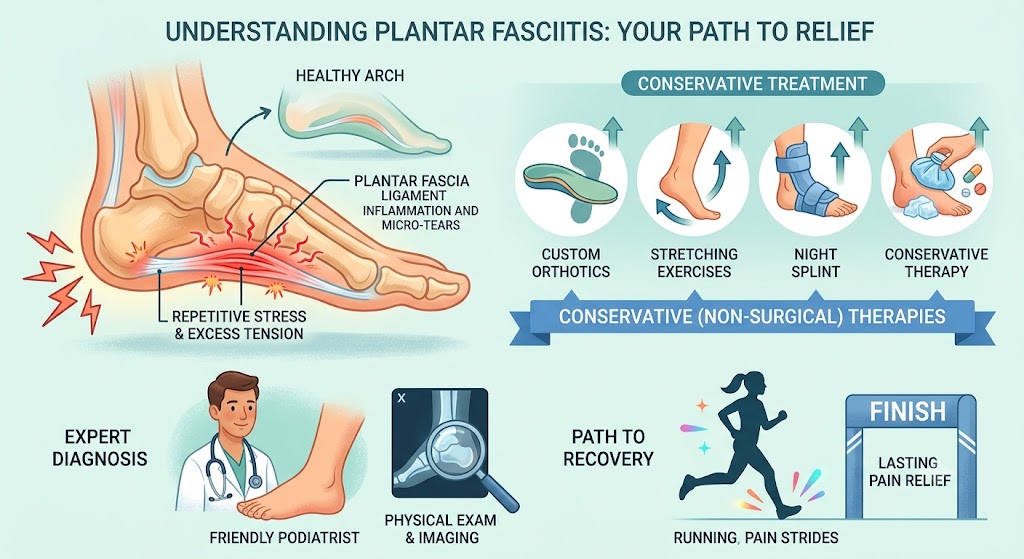
The plantar fascia is a thick, fibrous band of tissue along the bottom of your foot. It connects your heel bone (calcaneus) to your toes and acts as a shock-absorbing bowstring to support your arch. However, repetitive stress, improper footwear, or biomechanical imbalances can place excessive tension on this tissue. Consequently, micro-tears and painful inflammation occur. As foot and ankle specialists, providing targeted plantar fasciitis treatment is our main goal to help you achieve lasting relief.
1. Symptoms: Recognizing Plantar Fasciitis
While heel pain can stem from various sources, plantar fasciitis presents with distinct clinical signs:
• Sharp Morning Pain: The hallmark symptom is intense heel pain during your first steps out of bed. As you walk around, the fascia stretches and the pain may subside into a dull ache. However, it often returns after prolonged standing or sitting.
• Localized Heel Tenderness: Pain is typically concentrated at the bottom-inner aspect of the heel. This is right where the fascia attaches to the heel bone.
• Post-Exercise Discomfort: Pain usually worsens after activity rather than during it. This happens because inflammation flares up once stress is reapplied to the tissue.
• Tight Achilles Tendon: Many patients also experience tightness in their calf muscles and Achilles tendon. This tightness places extra mechanical strain on the plantar fascia.
2. Diagnosis: How a Podiatrist Evaluates the Condition
Self-diagnosing heel pain can be risky. For instance, it may lead to mismanaging conditions like stress fractures or nerve entrapment. A proper podiatric evaluation includes the following steps:
• Physical Examination: We perform a comprehensive physical exam to isolate point tenderness. In addition, we evaluate arch height, calf tightness, and gait mechanics.
• Windlass Test: During this test, we gently extend your big toe. This movement replicates tension on the plantar fascia to evaluate your pain response and plan your plantar fasciitis treatment.
• Advanced Imaging Protocols:
– In-Office Digital X-Rays: Although soft tissue is not visible on X-rays, imaging helps us rule out bone spurs or stress fractures.
– Diagnostic Ultrasound or MRI: If pain persists, soft-tissue imaging allows us to measure fascia thickening and check for partial tears.
3. Effective Plantar Fasciitis Treatment Options
Our clinic prioritizes early conservative plantar fasciitis treatment. This approach helps resolve tissue inflammation and restore normal biomechanics before structural damage progresses. According to medical guidelines from the [American Academy of Orthopaedic Surgeons](https://orthoinfo.aaos.org/en/diseases–conditions/plantar-fasciitis-and-bone-spurs/), most patients respond very well to early non-surgical care.
Conservative (Non-Surgical) Therapies:
Over 90% of cases resolve successfully with comprehensive conservative care:
• Custom Orthotics: Over-the-counter insoles rarely provide adequate support. In contrast, custom-molded orthotics redistribute pressure and realign the foot structure as a key part of your plantar fasciitis treatment.
• Targeted Physical Therapy: Specific calf stretches, plantar fascia exercises, and myofascial release help alleviate chronic tension across your lower leg.
• Night Splints: Wearing a night splint holds your foot in a neutral position overnight. Therefore, it prevents the fascia from contracting and reduces morning pain.
• Anti-Inflammatory Care: Rest, ice application, short-term NSAIDs, or advanced therapies like shockwave treatment help break the chronic pain cycle.
Surgical Intervention:
Surgery is rarely needed. In fact, we only consider it after 6 to 12 months of non-responsive conservative management. Options include:
• Plantar Fascia Release: A precise procedure to partially detach the fascia from the heel bone, which releases excess tension.
• Gastrocnemius Recession: Lengthening tight calf muscles to reduce overall strain on the arch.
Don’t Let Heel Pain Hold You Back
Plantar fasciitis is a progressive condition that rarely resolves on its own. Furthermore, leaving severe heel pain untreated can alter your walking mechanics and cause secondary pain in your knees, hips, or lower back.
If you suffer from persistent heel pain, getting professional plantar fasciitis treatment early is essential. Contact our board-certified foot and ankle specialists today to schedule a consultation and start your personalized recovery plan.