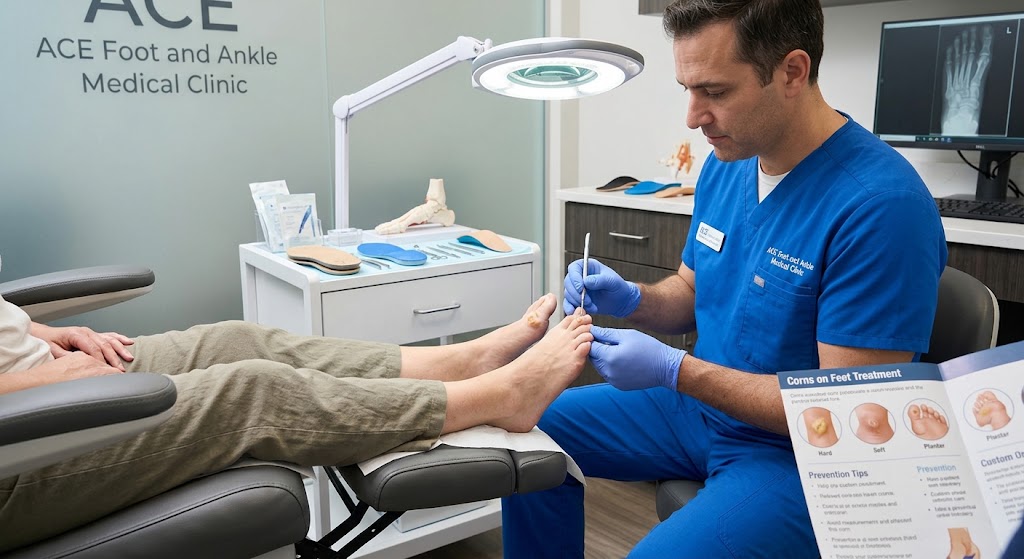
Understanding Corns on Feet: Symptoms, Causes, and Professional Care
Are you struggling with persistent, painful pressure on your toes or sole when walking? Finding an effective corns on feet treatment is essential when every step brings sharp discomfort. In our foot clinic, treating corns is one of the most common ways we help patients achieve long-term heel and toe pain relief.
A corn is a localized area of thickened skin that develops as a protective response against repeated friction, pressure, or rubbing. While they often start as minor annoyances, seeking timely corns on feet treatment prevents severe localized pain and restores your daily mobility.
1. Symptoms: Recognizing Foot Corns
While foot corns are often confused with calluses or plantar warts, they present distinct clinical features:
- Hard Center Core: Corns typically have a dense, raised center surrounded by inflamed, tender skin.
- Pointed Localized Pain: Pressing directly on the corn often causes a sharp, burning pain as the hardened center presses into deeper skin layers and nerves.
- Common Locations: They frequently form on top of toe joints, between the toes (soft corns), or on weight-bearing areas of the sole.
- Skin Discoloration: The affected area often appears yellowish, gray, or rough compared to surrounding skin.
2. Diagnosis: How a Podiatrist Evaluates Your Foot Condition
Self-treating foot corns with sharp tools or over-the-counter medicated pads can lead to skin irritation or severe infection—especially for individuals with diabetes or poor circulation. A proper podiatric evaluation for corns on feet treatment includes:
- Physical & Visual Examination: We carefully examine the lesion to differentiate corns from warts, calluses, or underlying bony prominences.
- Gait and Footwear Analysis: Evaluating your walking mechanics and footwear helps us identify specific areas of excessive pressure or friction.
- In-Office Digital X-Rays: For severe toe deformities (such as hammertoes or bone spurs), imaging helps determine if underlying bone structure is causing friction.
3. Effective Options for Corns on Feet Treatment
Our clinic prioritizes safe, conservative therapies to remove the corn and prevent recurrence:
Conservative (Non-Surgical) Care
- Professional Debridement: A foot specialist carefully and painlessly shaves down the thickened skin layer to relieve pressure immediately.
- Custom Orthotics & Protective Padding: Custom-molded orthotics and gel pads redistribute weight and cushion the area, eliminating friction from shoes.
- Footwear Assessment: Switching to shoes with a wider toe box prevents squeezing and pressure on the toes.
Surgical Intervention
If a structural bone deformity continuously causes the corn to return, minor surgical correction may be recommended to realign the bone structure permanently.